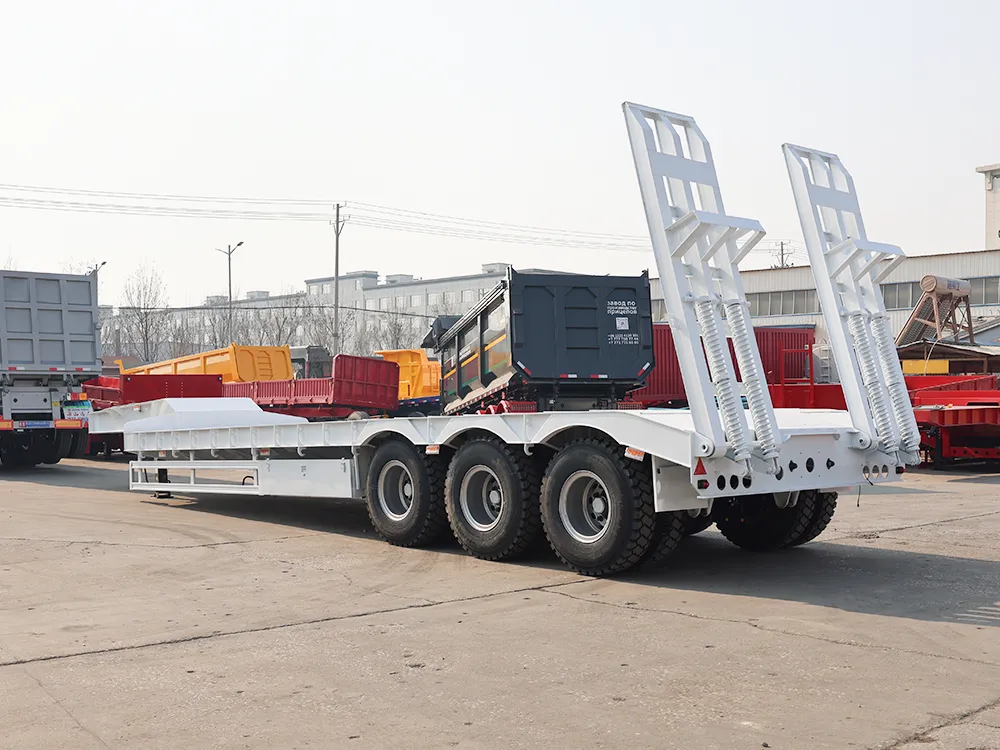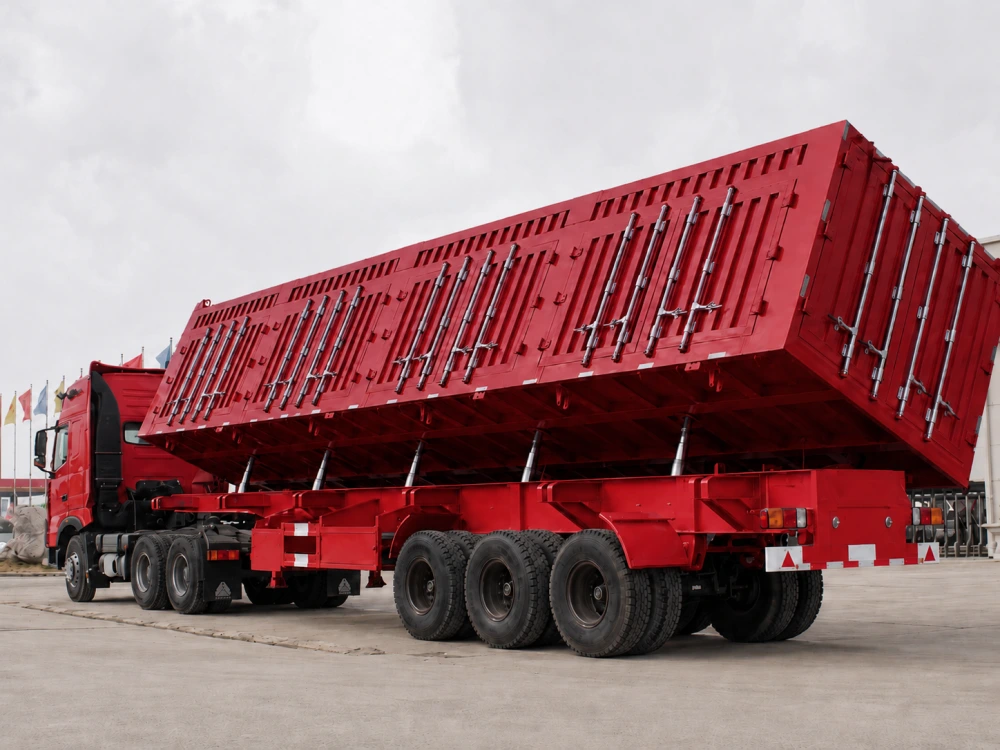

Samuel has been running heavy transport out of Nairobi for eleven years. Careful guy, knows his routes, never cuts corners on maintenance. In 2023, he lost a $40,000 contract — not because his truck failed, not because the cargo was overweight, but because his low bed trailer got pulled over at a weigh station 200 kilometers into Tanzania. The axle loading was legal under Kenyan standards. Under Tanzanian limits, it was over by 1.8 tons per axle.
Four days grounded. Contract gone. Client furious.
That story isn’t rare. We hear versions of it every few months. And almost every time, the problem traces back to one of three decisions made before the trailer even left the factory: axle configuration, load capacity assumptions, or road regulation research that stopped at the home market.
So let’s go through all three — properly.
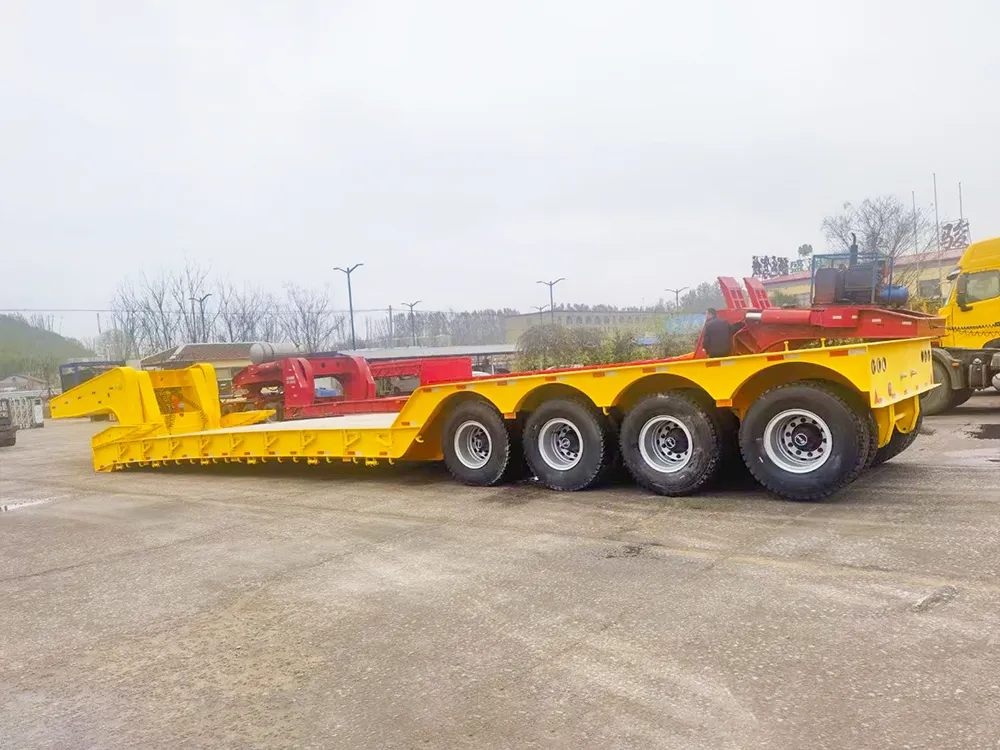
What Makes a Low Bed Trailer Different
The deck sits low. That’s the whole point — typically 800mm to 1,000mm off the ground, compared to 1,500mm or more on a standard flatbed.
That lower profile solves two real problems. First, it keeps oversized cargo under tunnel clearances and power lines that would otherwise make a route impossible. Second, it drops the center of gravity on heavy, top-heavy machinery — excavators, bulldozers, large generators — which matters a lot on anything other than a perfectly flat road.
Deck designs vary: fixed gooseneck, detachable gooseneck, hydraulic ramps for low-ground-clearance equipment. What sits underneath the deck, though — the axle configuration — is what actually determines how the trailer performs day to day.
Axle Configurations: The Decision That Drives Everything
2-Axle Low Bed
Rated for 40–60 tons. On sealed highways where the road quality is consistent and axle-load rules aren’t unusually tight, a 2-axle low bed trailer does exactly what you need. Lighter tare weight, easier to move around tight yards, lower tire costs over time. For port-to-warehouse runs or regular urban hauls on good roads, it’s a solid choice.
Here’s the thing, though — the moment that road deteriorates, or the ground softens after rain, those two axles concentrate a lot of weight over a small footprint. That’s when the stress fractures start.
3-Axle Low Bed
Rated for 60–80 tons. Walk any active construction corridor in Lagos, Riyadh, or Jakarta and most of the low beds you’ll see are 3-axle units. Not by accident.
The third axle spreads the load more evenly, cuts ground pressure per tire, and handles the kind of mixed road conditions — half-paved access roads, compacted gravel, seasonal deterioration — that make up most real-world heavy haulage. It also clears axle-load compliance in the majority of African and Middle Eastern markets without requiring special permits.
A fleet operator out of Accra told us his 3-axle units have averaged 200,000+ km across Ghana and Côte d’Ivoire with nothing beyond scheduled maintenance. Cross-border routes, variable road quality, no surprises. That’s the configuration earning its keep.
4-Axle Low Bed
Rated for 80–120+ tons. Mining contractors, power infrastructure projects, port equipment relocations — if your cargo regularly pushes past 80 tons, the 4-axle isn’t an upgrade. It’s where you should start.
Add that fourth axle, and ground pressure per tire drops significantly. That matters when you’re crossing temporary access roads, unpaved mine sites, or any route where you’re not sure what the ground will hold. Yes, the turning radius is wider. Yes, per-kilometer costs go up. On a 110-ton transformer move, those are not the numbers that matter most.
Load Capacity: What the Spec Sheet Won’t Tell You
Rated capacity is a manufacturer’s number. Real-world capacity is what your trailer can actually carry safely on your actual routes — and the gap between those two figures is where most operational problems start.
Three things interact to determine real-world capacity: the trailer’s structural rating, how the axle configuration distributes that load, and the road surface’s bearing capacity at the time of the haul. A low bed trailer rated for 80 tons on sealed highway may safely carry 60 tons on compacted gravel — and less still after a week of heavy rain.
A working reference:
| Configuration | Rated Capacity | Typical Real-World Range |
|---|---|---|
| 2-Axle | 40–60 T | 35–55 T on mixed roads |
| 3-Axle | 60–80 T | 55–75 T on mixed roads |
| 4-Axle | 80–120+ T | 75–110 T on mixed roads |
Plan around your worst-case road conditions. Not your best.
Road Regulations: The Part Most Buyers Research Last
This is, honestly, where the expensive mistakes happen — and it’s almost always because regulation research stopped at the origin country.
Kenya caps at 8,200 kg per axle on national highways. Tanzania? 8,000 kg across much of its network. Saudi Arabia enforces GVW caps that trigger mandatory route permits above certain thresholds. Indonesia applies different standards on trans-Java corridors versus outer island roads — sometimes dramatically different.
A low bed trailer that’s fully compliant leaving Lagos can face impoundment, forced offloading, or substantial fines at the first border crossing if the spec wasn’t built around the strictest market on the route.
Before you lock in a configuration, do this: check axle-load limits for every country on the route — not just origin and destination. Find out if your cargo type needs a special transport permit; oversized loads and certain machinery categories usually do. And verify bridge and clearance restrictions for your planned corridors, not the straight line on a map.
We’ve been helping operators work through exactly this for 13 years across Africa, the Middle East, and Southeast Asia. The compliance step isn’t bureaucratic box-ticking — it’s where the final spec gets determined.
When Custom Beats Standard
A factory-standard low bed trailer covers maybe 80% of use cases without issue. The remaining 20% — seasonal route changes, unusual cargo geometry, markets with non-standard regulatory requirements — that’s where operators quietly eat costs they didn’t plan for.
Early 2025, a logistics company in Dar es Salaam needed to keep moving construction machinery through Tanzania’s long rainy season. The unpaved access routes turned to thick mud within hours of rainfall. Standard specs weren’t going to hold up. We configured a 3-axle unit with widened tire spacing to cut ground pressure, a reinforced gooseneck for lateral stress on uneven terrain, and upgraded suspension calibrated for soft-ground conditions rather than highway running.
Zero bogging incidents across the entire rainy season. Their operations manager — straight-talking guy, not easily impressed — called it the best procurement decision they made that year.
Getting the spec right before the order goes in costs less than one breakdown in the field. Always.