
In African logistics, fleet operation and engineering transportation, choosing the right semi-trailer saves more money than choosing the right tractor unit.
Many African fleet owners face a common problem: semi-trailers that perform well in China or Southeast Asia often suffer from frequent beam cracks, tire blowouts, oil leaks and constant breakdowns in Africa. The core issue is not poor product quality, but failure to select models based on Africa’s road conditions, load regulations and transportation scenarios.
African transportation has unique characteristics: numerous rough roads, alternating no-load and heavy-load long-distance travel, intense high-temperature exposure, heavy sand and dust, scarce after-sales spare parts, and varying axle load regulations across countries. Blind selection leads to low vehicle attendance, soaring maintenance costs and delayed project losses.
Combining four mainstream transportation scenarios in Africa including mining, infrastructure, ports and long-distance trunk logistics, this article sorts out professional selection standards for five common semi-trailer types: flatbed, container, dump, tanker and lowboy. It serves as a reliable reference for logistics owners, fleet managers and purchasers, covering West Africa, East Africa, South Africa and Central Africa.

Understand the African Market: 4 Local Characteristics Before Selection
All trailer selections must adapt to local African transportation conditions. Parameters without scenario adaptation are meaningless.
Complex and Mixed Road Conditions
Most inland roads in Africa are unpaved, with widespread potholes, gravel roads, dirt roads and steep slopes. Long-distance trips always involve alternating good and bad road surfaces. This requires trailers with tough frames, shock-resistant suspension systems and torsion-resistant overall structures. Ordinary lightweight standard trailers cannot adapt to such environments and are prone to deformation and fracture.
High Temperature and Sand Dust Accelerate Wear
The tropical African climate brings year-round high temperatures and extremely hot road surfaces. Sand and dust accelerate tire aging, brake overheating, hydraulic system jamming and paint corrosion. African-spec trailers must be upgraded with enhanced heat dissipation, sealing and dustproof structures instead of low-end simplified configurations.
Common Overloading and Diverse National Axle Regulations
Heavy-load transportation is common in African logistics, with inconsistent traffic regulations across regions. For example, Nigeria has a single-axle limit of 10 tons, while South Africa’s single-axle limit is 12 tons. Model selection must balance legal weighing compliance and daily heavy-load practicality through flexible axle and load configuration matching.
Scarce Spare Parts, Simple and Durable Design Priority
Spare parts are hard to source in remote African areas, and local maintenance technology is limited. Complex electronically controlled and intelligent structures have high failure rates and difficult maintenance. Therefore, locally preferred trailers feature mechanical structures, universal accessories and mature craftsmanship to reduce downtime losses.
Five Mainstream Semi-Trailers: Scenario-Based Selection Guide for Africa
Specific cargoes and scenarios require matched trailer models to improve transportation efficiency and reduce operational costs.
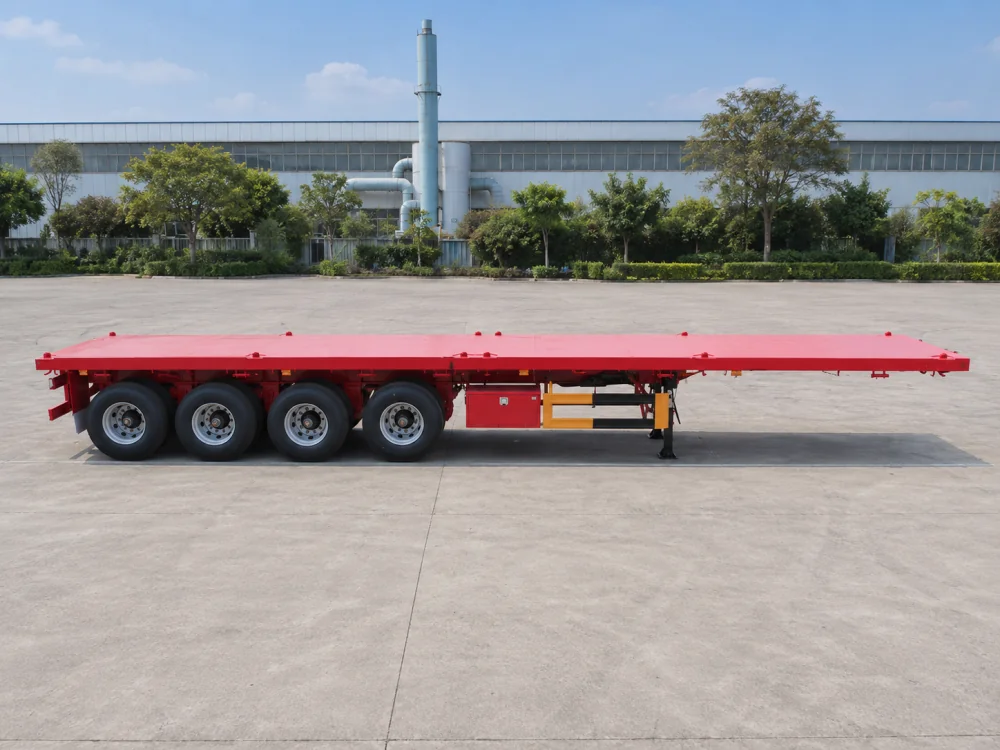
Flatbed Semi-Trailer: Universal All-Purpose Model for Africa
Application Scenarios: Transportation of hardware building materials, pipes, bagged goods, general merchandise and bulk cargo for long-distance trunk logistics. It is the most widely used basic model across Africa.
Africa-Specific Selection Points:
– Frame Configuration: Adopt thickened main beams and through-type girders instead of lightweight designs for excellent torsion resistance and fracture prevention on bumpy roads;
– Suspension System: Reinforced mechanical spring suspension is preferred for strong load capacity, durability and easy maintenance, suitable for all road conditions. Air suspension is not recommended due to high failure rates and maintenance costs in dusty environments;
– Axle Selection: 3-axle models for loads within 40 tons; 4-axle heavy-duty models for 50–60 tons heavy transportation to avoid overloading fines;
– Enhanced Details: Equipped with high-temperature resistant tires, widened anti-slip decks and reinforced lashing points to meet frequent cargo fixing demands in African logistics.
Key Reminder: Avoid blindly choosing lightweight trailers. Lightweight frames deform easily on unpaved African roads, saving money upfront but causing high long-term maintenance costs.
Container Chassis Trailer: Must-Have for Port and Cross-Border Transportation
Application Scenarios: Port container handling, cross-border standard container transportation, and 20ft/40ft container transfer, mainly serving coastal ports and cross-border trunk logistics.
Africa-Specific Selection Points:
– Lock Configuration: High-strength automatic twist locks with anti-vibration and anti-loosening performance to prevent container displacement and falling during bumpy long-distance transportation;
– Overall Structure: Integral frame welding technology with strong torsional rigidity, adapting to frequent reversing, towing and start-stop operations at ports;
– Road Adaptation: Reinforced protection and wear-resistant axles are required for inland cross-border transportation to resist damage from unpaved roads; standard configurations are sufficient for pure port operation;
– Compliance: The mainstream 3-axle configuration meets weight limit standards of most African ports.
Advantages: Simple structure, ultra-low failure rate, high value retention and easy resale, making it an essential model for African cross-border logistics companies.
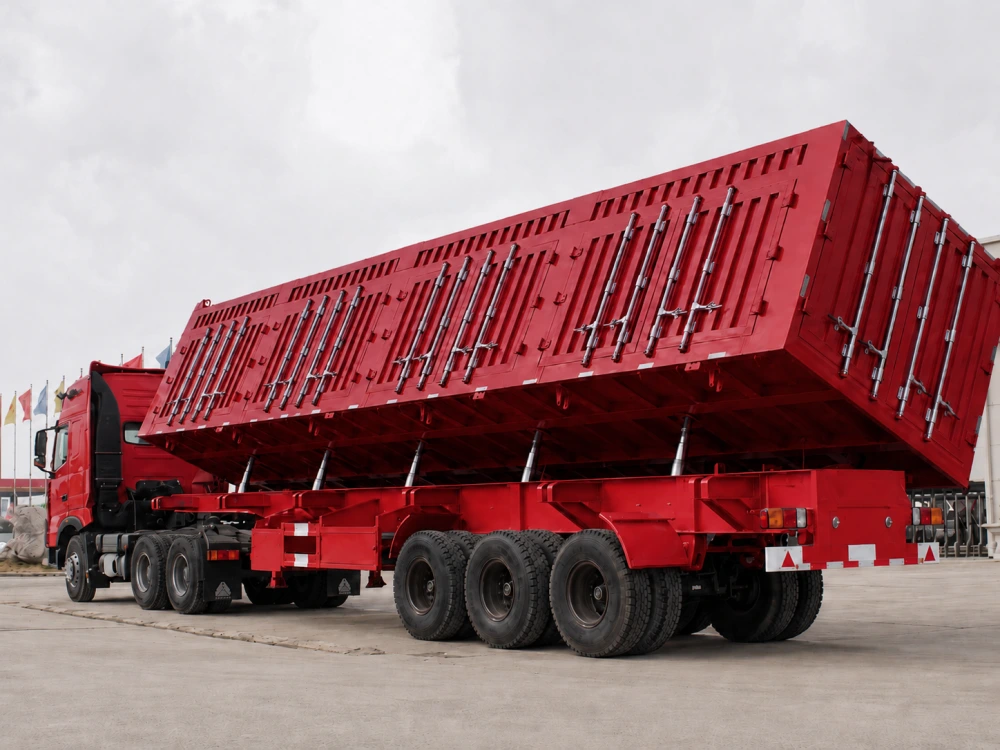
Dump Semi-Trailer: Core Model for Mining and Infrastructure
Application Scenarios: Transportation of mining ore, sand, gravel, earthwork and construction waste, widely used in infrastructure and mining projects in West Africa and Central Africa.
Africa-Specific Selection Points:
– Box Material: High-strength wear-resistant steel plates with thickened bottom and side plates to resist ore impact and abrasion and extend service life;
– Hydraulic System: Brand complete hydraulic lifting systems with stable lifting, pressure resistance, no jamming or oil leakage during continuous high-temperature operation;
– Structural Design: Rear dump design is preferred for simple structure, durability and easy maintenance; side dump models suit narrow construction sites;
– Heavy-Duty Configuration: 3-axle or 4-axle reinforced models with upgraded suspension and axles for high-frequency heavy-load mining operations.
Key Reminder: Never choose low-cost thin-walled boxes. They will crack and deform within 1–3 months under high-intensity mining operations, resulting in extremely high maintenance costs.
Fuel Tanker Trailer: Specialized Model for Oil, Gas and Chemical Cargo
Application Scenarios: Transportation of diesel, gasoline, edible oil and general chemical liquids for oil & gas trade and civil material logistics.
Africa-Specific Selection Points:
– Material Selection: Carbon steel tanks for fuel transportation with high cost performance and durability; stainless steel tanks for edible oil and fine chemicals to avoid corrosion and contamination;
– Compartment Design: Multi-compartment optional design allows simultaneous transportation of different oil products, improving operational flexibility and profit for scattered distribution business;
– Safety Configuration: Standard equipped with emergency cut-off valves, anti-wave baffles, electrostatic grounding devices and anti-leakage sealing structures to eliminate safety hazards during high-temperature long-distance transportation;
– Heat Dissipation Protection: Upgraded brake heat dissipation system to prevent brake failure on long downhill heavy-load routes.
Compliance Note: African hazardous material transportation inspections are strict. Tank pressure resistance, sealing performance and safety accessories must meet standards to avoid vehicle detention and fines.
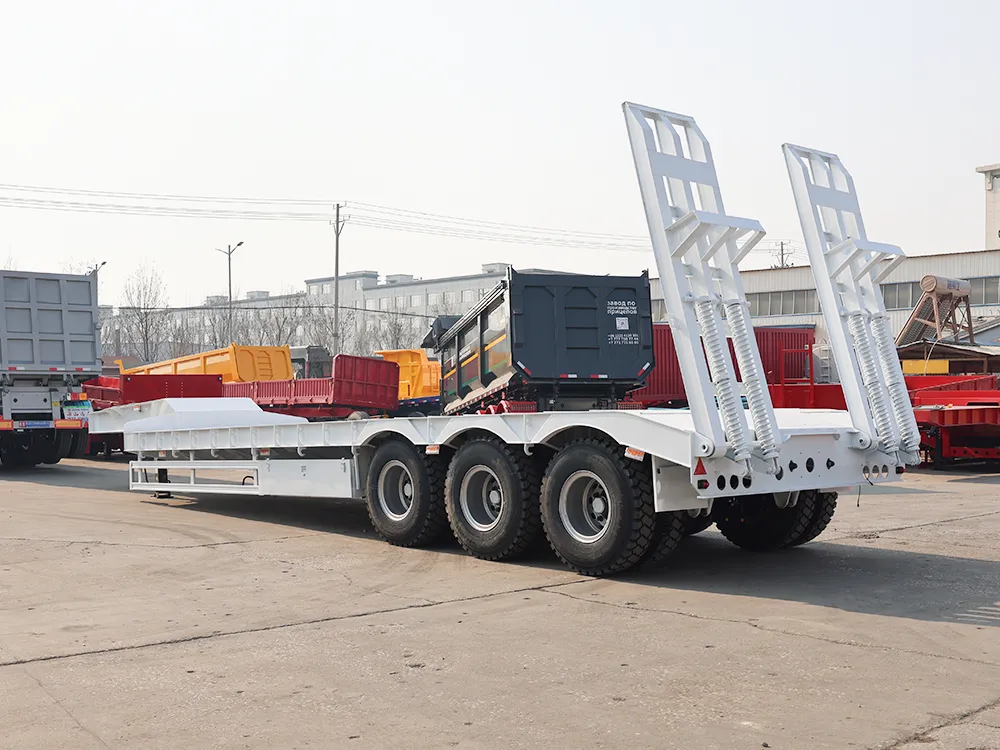
Lowboy Semi-Trailer: Exclusive Model for Engineering Machinery Transportation
Application Scenarios: Transportation of large construction machinery such as excavators, bulldozers, cranes and drilling rigs, supporting infrastructure and mining projects.
Africa-Specific Selection Points:
– Load Specification: 60–80 ton models for conventional engineering machinery; multi-axle heavy-duty models above 100 tons for super-heavy equipment;
– Structural Preference: Gooseneck or detachable gooseneck design for convenient equipment loading and unloading; low-center-of-gravity structure prevents rollover on bumpy African roads;
– Deck Configuration: Thickened patterned plates and dense cross beams for compression and wear resistance against heavy machinery pressure;
– Safety Details: Equipped with multiple lashing rings and anti-slip baffles to firmly fix equipment and prevent displacement during long-distance transportation.
Operational Advantages: High profit per trip and low market competition, making it a high-yield segment in African engineering logistics.
Universal Golden Configurations for African Trailers (All Models Applicable)
The following configurations are essential for all trailer types to adapt to Africa’s harsh environments and reduce maintenance costs:
1. Axles: Brand heavy-duty axles with high wear resistance and load capacity, with widely available spare parts in Africa for easy replacement;
2. Suspension: Reinforced mechanical suspension with excellent shock resistance and stability, suitable for gravel and bumpy rough roads;
3. Tires: High-temperature resistant and wear-resistant heavy-duty tires, replacing ordinary road tires to adapt to extreme heat and gravel abrasion;
4. Brake System: Upgraded heat-dissipating brakes and extended braking stroke for continuous heavy-load braking on long downhill roads;
5. Overall Craftsmanship: Full vehicle derusting, thickened paint coating and enhanced dust sealing to resist high temperature, sand dust and corrosion aging.
Three Core Selection Avoidance Principles (Summarized by Senior African Fleet Operators)
Do Not Prioritize Low Prices — Low Cost Equals High Loss
The core indicators of African transportation are vehicle attendance rate and durability. Low-end low-cost trailers seem cost-effective initially, but frequent breakdowns, downtime and part replacement lead to far higher annual comprehensive costs than high-quality durable models.
Abandon Domestic Standards, Prioritize African Localized Customization
Lightweight and intelligent configurations designed for China are not suitable for Africa. Ideal African trailers feature simple structures, extreme durability, universal accessories and convenient maintenance.
Select Models Based on Main Scenarios, Not Blind Versatility
Choose dump trailers and heavy-duty flatbeds for long-term mining business; container chassis for port cross-border logistics; lowboy trailers for engineering machinery transport. Scenario matching maximizes transportation efficiency and reduces operational costs.
Conclusion: Core Logic of African Trailer Selection
Semi-trailer selection for African logistics is never about parameter stacking, but about adapting to local road conditions, cargo types, national regulations and maintenance conditions.
Flatbed trailers for general cargo, chassis trailers for port cross-border transport, dump trailers for mining and infrastructure, tanker trailers for liquid goods, and lowboy trailers for engineering machinery. Selecting the right model and upgrading localized enhanced configurations can greatly reduce failure rates, improve fleet attendance and steadily increase long-term logistics profits.
Custom Service: If you need a personalized trailer selection solution based on your operating country, main cargo types and conventional load capacity, feel free to contact us for cost-effective and locally adapted trailer recommendations.