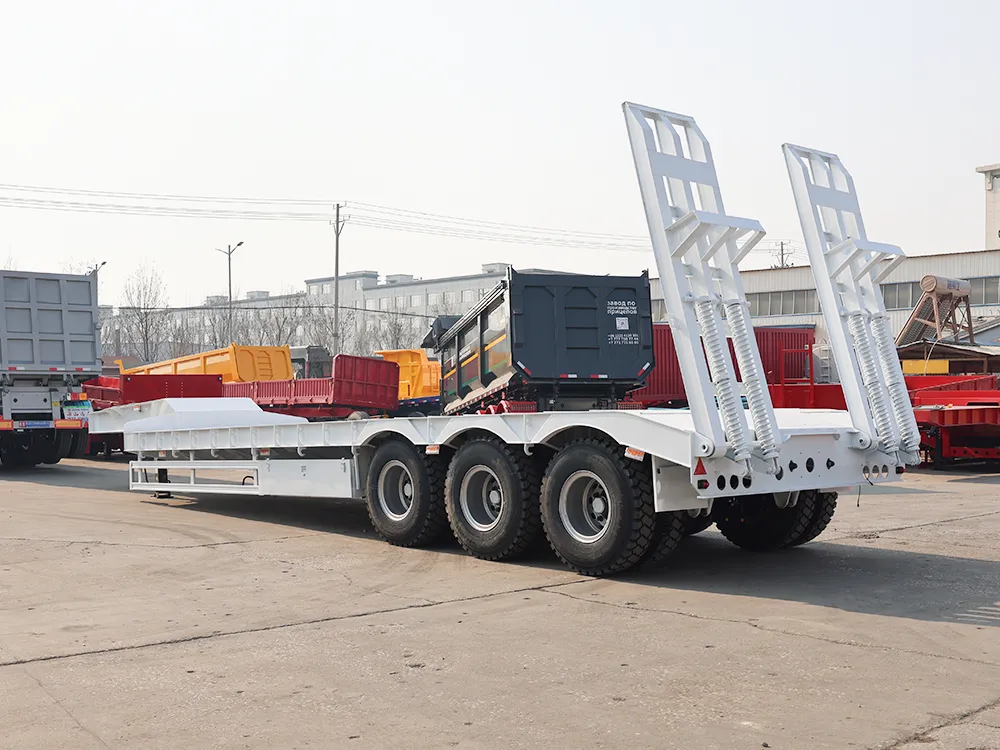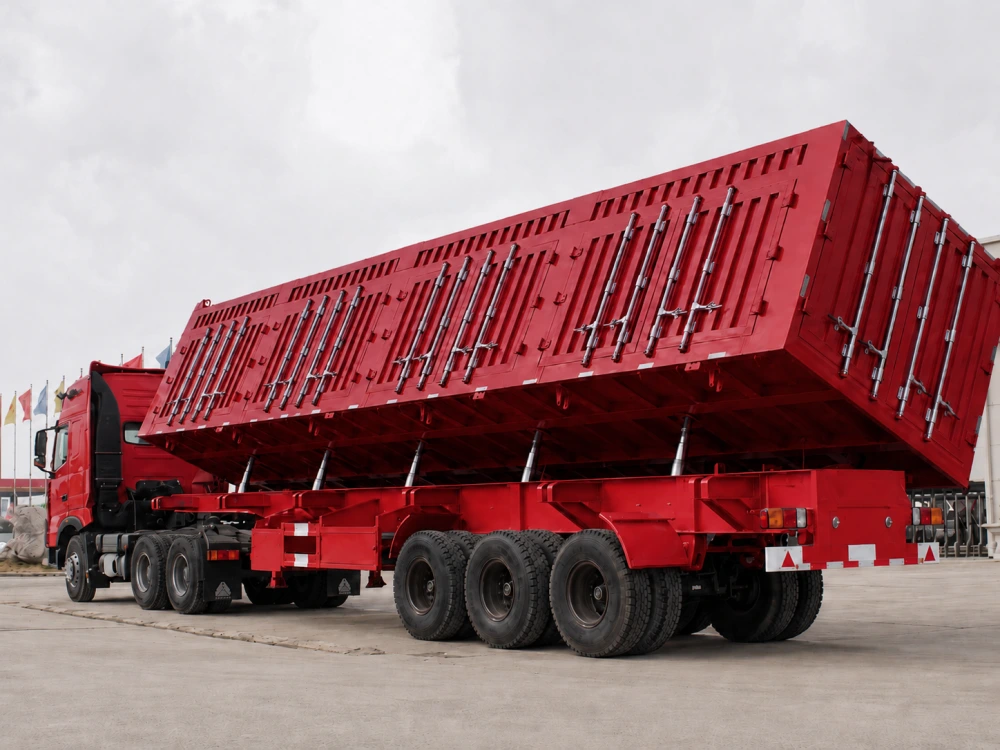

Container flatbed trailers are the backbone of global freight logistics, responsible for transporting ISO containers, heavy machinery, steel materials and bulk cargo across ports, highways and construction sites. A reliable flatbed trailer ensures stable transportation, reduces operational downtime and cuts long-term maintenance costs, while subtle design defects, inferior component quality and improper maintenance often lead to sudden breakdowns, traffic hazards and economic losses. This article analyzes the core characteristics of high-quality container flatbed trailers and the key flaws that trigger frequent failures, providing practical references for fleet operators, buyers and maintenance personnel.


Core Characteristics of a Reliable Container Flatbed Trailer
A dependable container flatbed trailer is not defined by appearance or paint finish, but by robust structural design, high-standard component configuration, stable operating performance and durable anti-fatigue capability. Every core part is engineered to adapt to heavy loads, long-distance travel and complex road conditions.
High-Strength Structural Frame with Optimized Load Distribution
The frame is the load-bearing foundation of the flatbed trailer, and its material and structural design directly determine the trailer’s load capacity and service life. Reliable trailers adopt T-1 high-tensile steel or low-alloy high-strength steel for main beams and cross members, with a yield strength of up to 100,000 PSI. This material achieves a perfect balance of light weight and high rigidity, avoiding excessive dead weight while resisting bending, twisting and fatigue deformation under long-term heavy load conditions.
In terms of structure, qualified trailers adopt an integral welded frame with dense and evenly arranged cross members, which can disperse concentrated container pressure to the entire frame. The flat floor plate is thickened and reinforced to prevent local depression and deformation during container placement and cargo binding. In addition, the frame welding process adopts full penetration welding and stress relief treatment to eliminate internal welding stress, effectively avoiding frame cracking during long-distance transportation and bumpy road driving.
Standardized and Stable Container Locking System
Twist locks are the core safety components for fixing ISO containers, and their reliability directly determines transportation safety. High-quality flatbed trailers are equipped with factory-installed standard twist locks that fully comply with international container transportation specifications. These twist locks feature precise positioning, flexible rotation and strong locking force, which can firmly lock 20ft, 40ft and other standard containers to prevent sliding, shaking and tipping during driving, braking and turning.
Reliable locking systems also include reinforced lock bases and anti-loosening structures. The lock bases are integrally welded with the frame to avoid falling off or displacement under impact. Meanwhile, auxiliary limit devices are configured to prevent accidental unlocking caused by road vibration, ensuring zero displacement of containers in high-speed driving and harsh working conditions.
Stable Running Gear and Scientific Axle Configuration
Running gear including axles, suspension and tires determines the trailer’s driving stability and load-bearing uniformity. Qualified flatbed trailers adopt brand high-load axles with precise production tolerances, and the axle spacing error is controlled within ±3mm. Scientific axle layout (tandem or tridem configuration) matches the legal load limit, realizing uniform load distribution and avoiding single axle overload.
In terms of suspension, high-performance mechanical suspension or air suspension is equipped with strong shock absorption and anti-fatigue capabilities. Suspension bushings and brackets are made of wear-resistant and high-toughness materials to reduce vibration loss. Supporting radial tubeless tires with load-bearing specifications matching the trailer’s rated load can effectively reduce uneven wear and improve driving safety and durability. A reliable running gear can reduce tire wear by more than 18% and extend the overall service life of the trailer.
Safe and Sensitive Braking and Electrical System
The braking system is the key to driving safety of flatbed trailers. Reliable models are equipped with dual-line air brake systems matched with ABS anti-lock braking devices, which ensure sensitive and stable braking response under full load, empty load and rainy and slippery road conditions. The automatic slack adjuster can automatically compensate for brake pad wear to keep consistent braking clearance and avoid braking failure caused by manual adjustment errors.
The electrical system adopts waterproof and dustproof LED lights and sealed wiring harnesses, with good anti-aging and anti-interference capabilities. All circuits are arranged in a standardized manner with anti-loosening connectors, which can adapt to high-temperature, rainy and dusty working environments, ensuring normal operation of steering lights, brake lights and marker lights and avoiding traffic violations and safety hazards caused by electrical faults.
Durable Anti-Corrosion and Protective Treatment
Container flatbed trailers often operate in ports, coastal areas and construction sites, facing erosion from salt fog, humidity, rainwater and dust. Reliable trailers undergo multi-layer anti-corrosion treatment including shot blasting rust removal, primer anti-rust treatment and weather-resistant topcoat spraying. This process can effectively isolate the frame and components from corrosive media, prevent rusting and metal thinning, and avoid structural strength attenuation caused by corrosion.
Key components such as twist locks, axle joints and suspension parts are additionally coated with anti-rust grease and wear-resistant coatings to reduce mechanical wear and corrosion damage, ensuring long-term stable operation of the trailer in harsh environments.
Common Flaws That Cause Flatbed Trailer Breakdowns
Most trailer breakdowns stem from inherent design defects, inferior component configuration and neglected daily maintenance. These hidden flaws will gradually evolve into faults such as frame cracking, braking failure and running gear damage during operation, leading to vehicle downtime and even traffic accidents.
Frame Structural Defects and Material Inferiority
Many low-cost flatbed trailers adopt low-strength ordinary steel and simplified frame structures to reduce costs. The main beam and cross member have insufficient thickness and rigidity, and the welding process is rough with incomplete penetration and welding pores. In the case of long-term heavy load and bumpy driving, stress concentration occurs at the welding joints and weak structural parts, resulting in frame bending, deformation and even cracking.
In addition, some trailers have unreasonable load-bearing design with unevenly distributed cross members, which leads to excessive local pressure on the floor and frame. Long-term container stacking will cause floor depression and beam deformation, seriously reducing the trailer’s load-bearing capacity and service life.
Faults of Locking and Cargo Fixing Components
Inferior twist locks are a common safety hazard and breakdown cause. Low-quality twist locks are made of low-toughness cast iron with poor processing precision, which are prone to jamming, inflexible rotation and insufficient locking force. Under vibration and impact during driving, the locks are easy to loose or fail to lock in place, resulting in container displacement.
Auxiliary fixing accessories such as binding straps and chains also have hidden flaws. Nylon straps with unqualified thickness and poor wear resistance are easily cut and aged by container edges, and a 10% width cut will reduce the bearing strength by more than 25%. Aging and elongated chains will lose their fixing effect, leading to cargo loosening and even falling during transportation.
Running Gear Abnormalities and Axle Alignment Errors
Axle alignment deviation is a hidden and harmful flaw. When the axle spacing error exceeds ±3mm, the trailer will run off-track, causing serious uneven tire wear. Severe tire wear will lead to tire blowout during high-speed driving. At the same time, misaligned axles will increase suspension load, accelerate bushing and bracket wear, and induce suspension failure.
Inferior suspension components are also a major cause of breakdowns. Low-quality suspension springs are prone to fatigue deformation and fracture, and aging and damaged suspension bushings will lose shock absorption and stability functions, resulting in severe vehicle jitter, increased driving resistance and accelerated wear of the entire running gear. In addition, mismatched tire load specifications will cause tire overload damage and frequent faults.
Braking and Electrical System Failures
Unqualified braking systems are the main cause of safety accidents and breakdowns. Trailers without ABS devices are prone to wheel locking and tail flicking during emergency braking. Aging air pipelines, loose joints and damaged automatic slack adjusters will lead to slow braking response, insufficient braking force and even braking failure. Many roadside out-of-service violations are caused by silent failure of slack adjusters.
The electrical system is prone to aging and damage due to inferior configuration. Unsealed wiring harnesses are easy to enter water and dust, causing short circuits and circuit failures. Ordinary bulb lights have poor weather resistance and are easy to burn out, resulting in lighting failure. Loose connectors will cause intermittent circuit faults, affecting normal driving and inspection passing.
Insufficient Anti-Corrosion Treatment and Accelerated Aging
Shoddy anti-corrosion treatment is a long-term hidden danger for trailer failure. Many manufacturers only carry out simple paint spraying without shot blasting rust removal and primer treatment. The paint layer is thin and easy to fall off. In coastal and port environments with high salt fog, the frame and metal components will rust rapidly, resulting in metal thinning and reduced structural strength.
Corrosion will first occur at welding joints and component gaps, gradually expanding to the entire frame, causing local rust perforation and structural fatigue. Corroded twist locks, axles and suspension parts will have reduced flexibility and bearing capacity, leading to frequent mechanical faults and greatly shortened trailer service life.
Improper Daily Operation and Maintenance Negligence
Most trailer breakdowns are aggravated by human factors. Long-term overload operation exceeds the trailer’s rated load limit, causing irreversible fatigue damage to the frame, axles and suspension. Irregular inspection and maintenance lead to unaddressed minor faults such as loose twist locks, worn tires and aging brake pads, which eventually evolve into major breakdowns.
In addition, unreasonable cargo placement and uneven load distribution will cause unilateral overload of the trailer, resulting in eccentric wear of running gear and local frame deformation. Lack of regular cleaning and anti-rust maintenance will accelerate component corrosion and aging, increasing the failure rate.
Key Standards for Selecting and Maintaining Reliable Trailers
Selection Standards: Prioritize Structure and Component Quality
When purchasing a container flatbed trailer, focus on high-strength steel frame structure, standard qualified twist locks, precision axles with small tolerance, complete ABS braking system and multi-layer anti-corrosion treatment. Avoid choosing low-cost trailers with simplified processes and inferior components solely based on price, so as to reduce subsequent maintenance costs and failure risks.
Daily Maintenance: Eliminate Hidden Faults in Advance
Establish a regular inspection mechanism: check the frame for deformation and cracking, twist locks for flexibility and firmness, axles for alignment, tires for wear, and braking and electrical systems for normal operation. Regularly clean the trailer, lubricate movable components and repair peeling paint and rust spots in time. Strictly prohibit overload operation and standardize cargo placement to ensure uniform load distribution.


Conclusion
The reliability of a container flatbed trailer depends on high-strength structural design, standardized core components, stable operating systems and perfect anti-corrosion protection. Frame defects, inferior locking parts, running gear abnormalities, braking system faults and insufficient anti-corrosion treatment are the main flaws leading to breakdowns. For logistics fleets, scientific selection, standardized operation and regular maintenance are the key to extending trailer service life, reducing failure downtime and improving transportation efficiency and economic benefits.