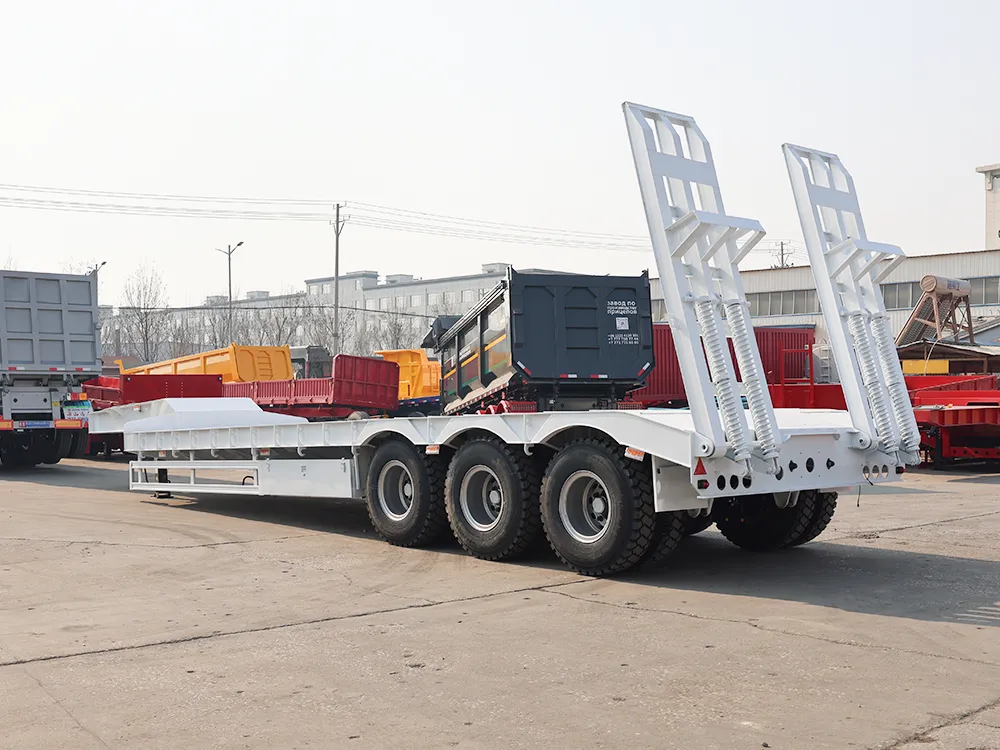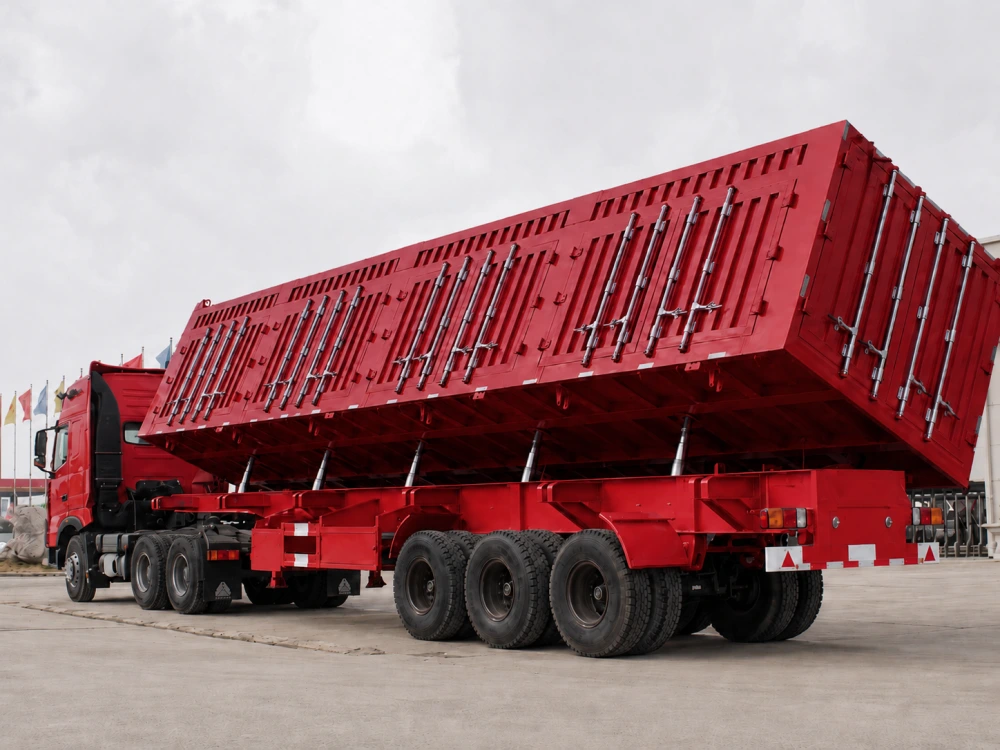

Introduction: The Tough Dilemma of Machinery Logistics in Tanzania
I am Hassan, a local logistics practitioner with over ten years of experience in Tanzania. Over the past decade, I have witnessed the rapid development of Tanzania’s infrastructure industry. Urban road upgrades, mining area development, farmland renovation, and municipal projects are booming across the country. This has led to a skyrocketing demand for the transportation of large construction machinery, including excavators, loaders, and cranes. For a long time, however, heavy equipment transportation remained the biggest challenge for the local logistics sector. Complicated road conditions, poorly adapted vehicles, and high cargo losses have held back countless local logistics businesses — until I introduced a Chinese low-bed trailer, which completely transformed my logistics operations.

Long-Term Pain Points of Traditional Trailer Transportation
Transporting construction machinery in Tanzania is never a simple haulage job. Local road conditions are extremely uneven: narrow urban streets, muddy and bumpy rural dirt roads, plus numerous steep slopes and sharp curves. Meanwhile, the official national height limit of 4.5 meters makes ordinary trailers totally unsuitable for oversized construction equipment. Like most local logistics owners, I used to rely on standard flatbed trailers and old-fashioned trucks to transport machinery, which brought endless troubles.
Large excavators and loaders usually weigh 8 to 30 tons with bulky dimensions. Ordinary trailers feature a high chassis and insufficient load capacity. When traveling on rough roads, they easily lose balance, causing severe vibration that damages equipment and frequently leads to tilting or sideslip risks. For over-height machinery, old trailers were completely unfit, forcing us to disassemble equipment for segmented transportation. This doubled the overall delivery time, greatly increased labor, disassembly and reassembly costs, delayed construction schedules, and often resulted in customer compensation claims. Worse still, Tanzania enforces strict traffic compliance inspections. Non-compliant vehicles are frequently detained during cross-region transportation and road checks, generating massive hidden costs and squeezing profit margins.
Why I Finally Chose Chinese Low-Bed Trailers
During that period, Tanzania’s infrastructure market kept expanding, driven by the ongoing East Africa 2030 mega infrastructure initiative. Imports of construction machinery surged, yet compliant and reliable heavy-duty transport vehicles were extremely scarce locally. Most logistics companies could only take small and light cargo orders, missing out on numerous high-value heavy transport contracts. With years of industry experience, I clearly knew that professional equipment tailored for local working conditions was essential to stabilize and expand my business. After comparing European, American and Japanese trailers — which came with exorbitant prices, complicated after-sales services and designs unsuitable for African road conditions — I finally turned to Chinese-manufactured low-bed trailers.
Core Advantages: Perfect Adaptation to Tanzanian Road Conditions
Ultra-Low Chassis Solves Height Limit and Efficiency Problems
Right after putting this Chinese low-bed trailer into service, I experienced its all-round advantages, perfectly designed for Tanzania’s harsh road conditions. Its most outstanding feature is the ultra-low chassis, which fully complies with the local 4.5-meter height limit. Construction machinery that previously required disassembly can now be transported in one piece, cutting transportation time by half and completely eliminating equipment damage and malfunctions caused by repeated disassembly and reassembly.
High Load Capacity and Superior Driving Stability
Built with an reinforced main beam and high-strength load-bearing structure, this low-bed trailer delivers exceptional load capacity and stability for Tanzania’s muddy dirt roads, damaged rural highways and long-distance heavy-haul transportation. Even when fully loaded with heavy excavators or large cranes, it runs steadily on bumpy roads without obvious shaking or sideslip, greatly improving transportation safety. Equipped with thick wear-resistant deck plates and reinforced suspension systems, it withstands long-term heavy loads and high-frequency operations, featuring strong deformation resistance and low failure rates, avoiding costly downtime for frequent repairs.
Flexible Structure and Full Traffic Compliance
It outperforms all traditional trailers in terms of practicality and compliance. The detachable auxiliary structure allows flexible adjustment according to the size and weight of different equipment, firmly securing narrow loaders, wide construction machinery and ultra-long mechanical parts to prevent displacement and collision damage during transit. Moreover, the trailer fully meets Tanzania’s road transportation compliance standards, matching local customs clearance and inspection requirements. It enables smooth cross-region transportation and road checks, effectively reducing hidden operating costs.
Business Changes: Breaking the Bottleneck of Local Logistics
This low-bed trailer has completely revitalized my logistics business. I used to only undertake small building material and general cargo transportation. Now, I can steadily take on heavy machinery transport orders for large-scale infrastructure projects, mining developments and municipal works. My business covers major Tanzanian cities including Dar es Salaam, Mwanza and Arusha, as well as surrounding mining and rural construction sites.
Orders that previously took two to three days to complete can now be delivered within one day, with zero equipment damage and zero transportation accidents. This has earned me an excellent reputation and stable cooperation with numerous engineering teams and infrastructure contractors. My business scale has expanded significantly with a sharp rise in order volume and profit margins. While most local logistics companies are restricted by outdated vehicles and unable to take heavy transport orders, this Chinese low-bed trailer has become my core competitive advantage in the local market.
Conclusion: Professional Equipment Empowers African Logistics Development
After more than a decade in this industry, I deeply believe that success in African logistics relies not on blind hard work, but on professional equipment adapted to local working conditions. Tanzania’s infrastructure boom is still ongoing, and the demand for heavy construction machinery transportation will only continue to grow. Traditional outdated vehicles can no longer keep up with industrial development.
For logistics practitioners engaged in engineering and heavy cargo transportation across Tanzania and East Africa, a durable, reliable and compliant low-bed trailer is far more than a transport tool — it is the foundation of a stable business, steady income and broader development prospects. Years of practical experience have proven that cost-effective, highly adaptable and high-quality Chinese trailers are the optimal choice for Africa’s complex logistics conditions, and a solid support for local logistics practitioners to develop businesses and increase profits steadily.