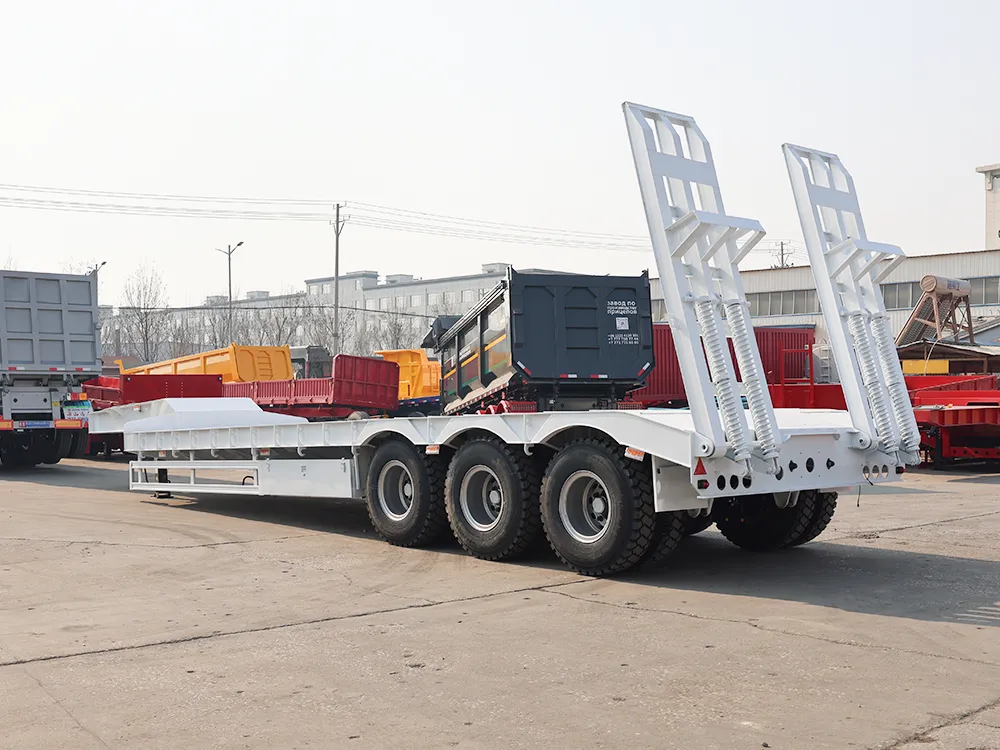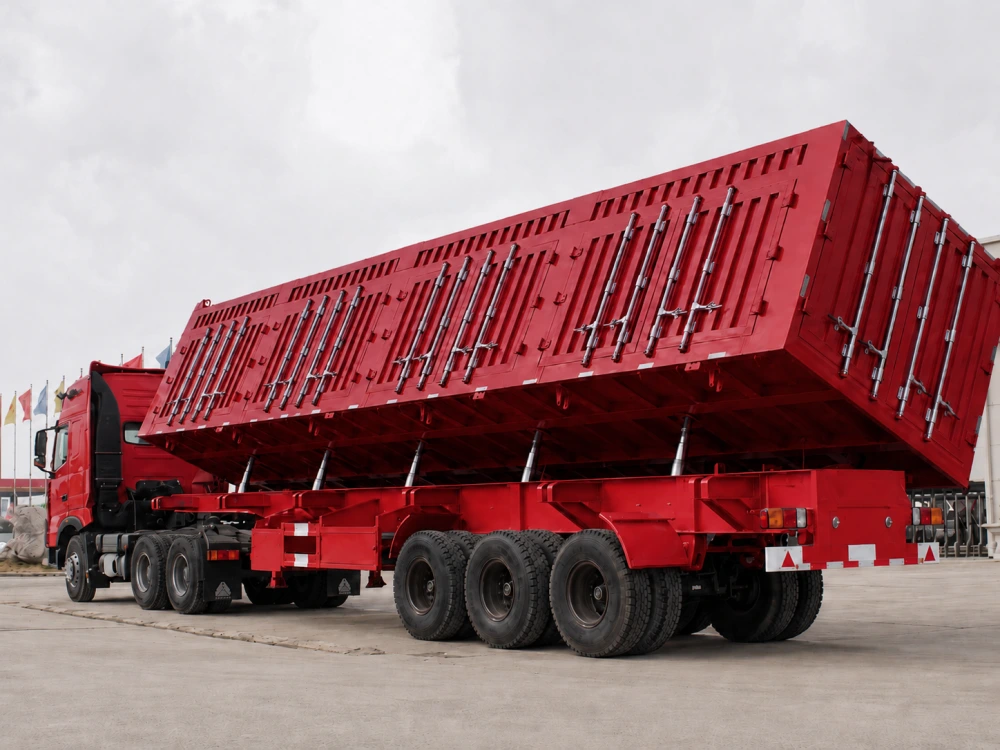

As the most widely used and versatile special trailer, flatbed semi-trailers dominate global trunk logistics, cross-border land transport and short-distance port haulage. Unlike tipper trailers and low-bed trailers with single functionality, their open design without side rails or enclosed cargo boxes makes them perfectly suitable for three major cargo types: containers, long steel products and bagged bulk goods. They have become the standard preferred by small and medium-sized logistics fleets, cross-border freight forwarders and engineering transport companies worldwide.
According to foreign trade industry statistics, flatbed semi-trailers account for over 42% of China’s total trailer exports, consistently ranking first in export sales. This article elaborates on the practical application value of flatbed semi-trailers from four aspects: applicable scenarios, structural advantages, selection guidelines and daily maintenance tips.


Three Core Compatible Cargo Types: Covering 90% of General Cargo Transportation Needs
Standard Containers: Main Carrier for Port Short-Haul and Intermodal Transport
20ft and 40ft standard dry containers and high cubes are the primary cargo for flatbed semi-trailers. Compliant flatbeds are pre-fitted with twist locks in line with international ISO container hole standards, requiring no additional fixing accessories. Drivers can secure containers by aligning with the lock holes directly at port yards, with the entire fixing process taking less than 5 minutes per container.
Compared with container skeletal trailers, flatbed semi-trailers feature higher compatibility. They can carry standard dry containers, as well as open-top and frame containers, and handle short-distance transit of over-height and over-width special containers. Currently, more than 90% of inland feeder transport at ports across the Middle East, Southeast Asia and Africa adopts flatbed trailers instead of skeletal trailers. This multi-purpose design effectively cuts fleet procurement costs.
Long Steel Products: Solving Challenges of Over-Length and Heavy-Duty Transport
Infrastructure steel materials such as I-beams, H-beams, deformed steel bars, steel plates and seamless steel pipes are usually over 12 meters long with unbalanced center of gravity. Enclosed cargo rail trailers cannot accommodate such goods, while low-bed trailers come with high purchase costs, making flatbed semi-trailers the optimal solution.
Export-oriented flatbed semi-trailers adopt a through-type main beam structure with a fully flat deck, preventing steel materials from being squeezed and deformed. Both sides of the trailer are equipped with lashing hooks, with 24 to 32 high-strength hooks fitted as standard. Steel wires and tensioners can be used to fasten cargo from multiple angles and prevent shifting during long-distance travel. Custom widened and extended decks are available for 18-meter extra-long steel products to comply with road dimension regulations in various countries.
Bagged and Palletized Bulk Cargo: Flexible Transport for Mixed General Goods
Flatbed trailers are ideal for transporting bulk goods including chemical fertilizers, grain, bulk bags for sand and gravel, hardware pallets and photovoltaic modules. The open deck imposes no restrictions on cargo height or shape. Forklifts can load and unload goods directly without opening compartment doors, boosting handling efficiency by 30% compared with cargo rail trailers.
For cross-border consolidated freight enterprises, containers and palletized goods can be loaded on one trip, maximizing space utilization and reducing transportation costs per kilometer.
Structural Design of Flatbed Semi-Trailers: Adaptable to Complex Road Conditions Worldwide
Main Beam and Deck Materials: Differences Between Domestic and Export Versions
Domestic flatbed trailers are mostly made of Q345 manganese steel, while export models are upgraded to high-strength T700 steel, cutting the overall weight by 8% and improving load-bearing capacity by 20%. The main beam adopts double-layer full-through welding technology to avoid fracture risks of split main beams caused by long-term bumpy travel.
The deck is constructed with 3mm patterned steel plates for excellent anti-slip and wear-resistant performance, effectively stopping pallets and steel products from sliding on gravel roads in Africa, Gobi roads in the Middle East and muddy roads in rainy Southeast Asia. All export trailers undergo sand blasting for rust removal followed by zinc-rich primer coating. Their service life reaches 6 to 8 years in coastal high-salt fog areas, far longer than the 3-year lifespan of ordinary painted trailers.
Running Gear and Braking System: Compliant with Overseas Regulations
Flatbed trailers for European and American markets are equipped with ABS anti-lock braking systems and air suspensions, meeting ECE certification standards of the European Union. Models for Asia, Africa and Latin America adopt lightweight mechanical suspensions and original FUWA axles. Spare parts are universally available globally for quick replacement at local repair shops. Wear-resistant vacuum tires are standard fitted to balance heavy load capacity and long-distance durability, eliminating troubles caused by unavailable spare parts for tire damage in remote areas.
Purchasing & Selection Guide: Answers to Common Mistakes of Overseas Buyers
How to Customize Deck Dimensions Properly
Many overseas buyers blindly choose over-wide decks, resulting in fines for violating local road dimension limits. A standard 12.5-meter deck is suitable for regular 40ft containers; a 13-meter widened deck is recommended for mixed transport of steel products; a 11-meter lightweight short deck works better for narrow rural roads in Africa. Never pursue oversized decks blindly — compliance is the top priority for cross-border transportation.
Is Side Protection and Mudguards Necessary?
The European Union and Australia mandate full installation of side guards, triple-axle mudguards and reflective markings. Trailers without any of these accessories cannot be registered or operated legally. Such fittings are not compulsory in some countries of Africa and Southeast Asia, yet side guards are still recommended as standard to reduce accident risks and compensation losses from rear-end collisions with small vehicles.
Daily Maintenance: Prolong Trailer Service Life
Flatbed semi-trailers have a far lower failure rate than tipper and tank trailers. Only three key maintenance tasks are required:
Inspect welding points of twist locks and lashing hooks every 5,000 kilometers. Re-weld immediately if any detachment occurs, as steel transport may pull the hooks loose.
Rinse salt deposits on the deck every two months after operations in coastal areas to prevent corrosion of the main beam.
Regularly inject grease into axle grease nipples to avoid axle seizure caused by high temperatures during travel.
With standardized maintenance, export flatbed semi-trailers can operate stably for more than 8 years without major repairs.

Conclusion
Featuring high versatility, low procurement cost, simple maintenance and compliance with regulations across countries, flatbed semi-trailers stand out from single-function special trailers and serve as an all-round solution for containers, steel products and bulk cargo.
For cross-border freight forwarders, long-haul logistics fleets and engineering transport companies, a compliant export-grade flatbed semi-trailer can handle over 80% of general cargo transport businesses. It helps optimize fleet asset utilization and cut costs of idle vehicles.
Our factory provides full customization on deck dimensions, suspension systems and locking devices for flatbed semi-trailers. We also supply complete export customs clearance documents and third-party quality inspection reports to meet vehicle registration standards worldwide.